.31f2f82b.svg)
UX/UI DESIGN
GetSave USSD
Empowering your financial journey through smarter saving tools.
https://getsave.io/Background & Goals
SAVE was created from a deep passion to empower unbanked individuals who traditionally save in informal groups using physical cash boxes. The goal was to help them transition to a secure, digital savings platform.
.549175cd.png)
The key objectives were
- Digitise the traditional group-saving process
- Provide full transparency so all members can view their contributions and group funds
- Ensure easy access to loans within the group
- Enable members to contribute anytime, from anywhere
The Challenge

Challenges
- Understanding and empathising with users to uncover their real saving habits and motivations
- Aligning our solution to fit within their existing saving methods and routines
- Accounting for limited mobile phone access and inconsistent internet connectivity
- Accounting for limited mobile phone access and inconsistent internet connectivity
- Testing prototypes with users and iterating based on feedback and observed difficulties
Role and Responsibilites

My role & the team
I collaborated closely with a Project Manager (who also served as an interpreter) and a team of five engineers to bring the project vision to life. Our strong cross-functional teamwork and clear communication created an efficient, aligned, and user-focused design-to-development process, ensuring a smooth transition from concept to execution.
My responsibilities were:
- Led the end-to-end product design process, from user research and wireframing to high-fidelity prototyping and handoff
- Ensured design alignment with core product goals and overall business objectives to maintain a clear user-centred direction
- Conducted and facilitated usability testing sessions to gather real user insights, validate design decisions, and guide data-driven iterations for improved user experience
Envisioning Future Experiences / Persona
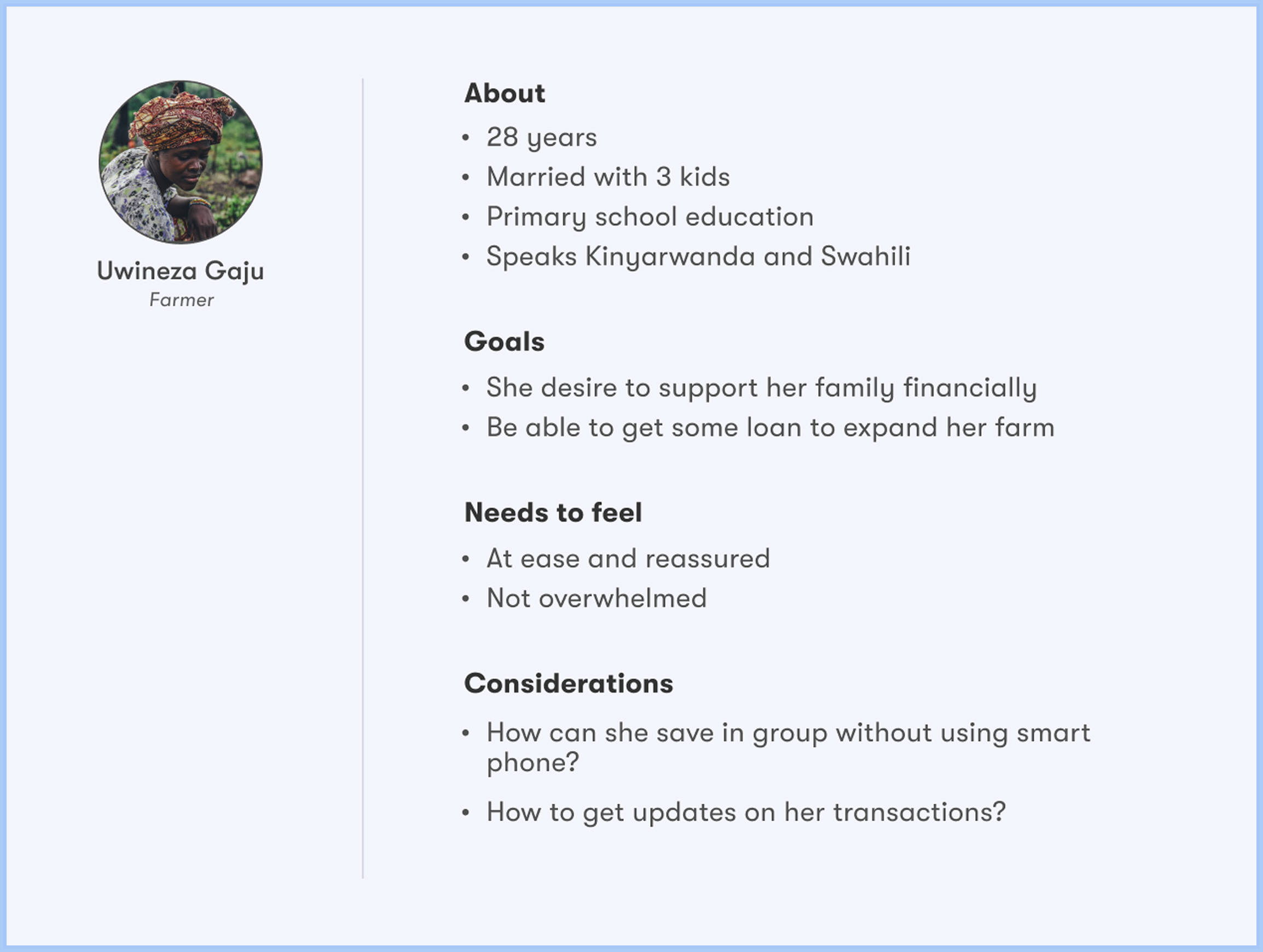
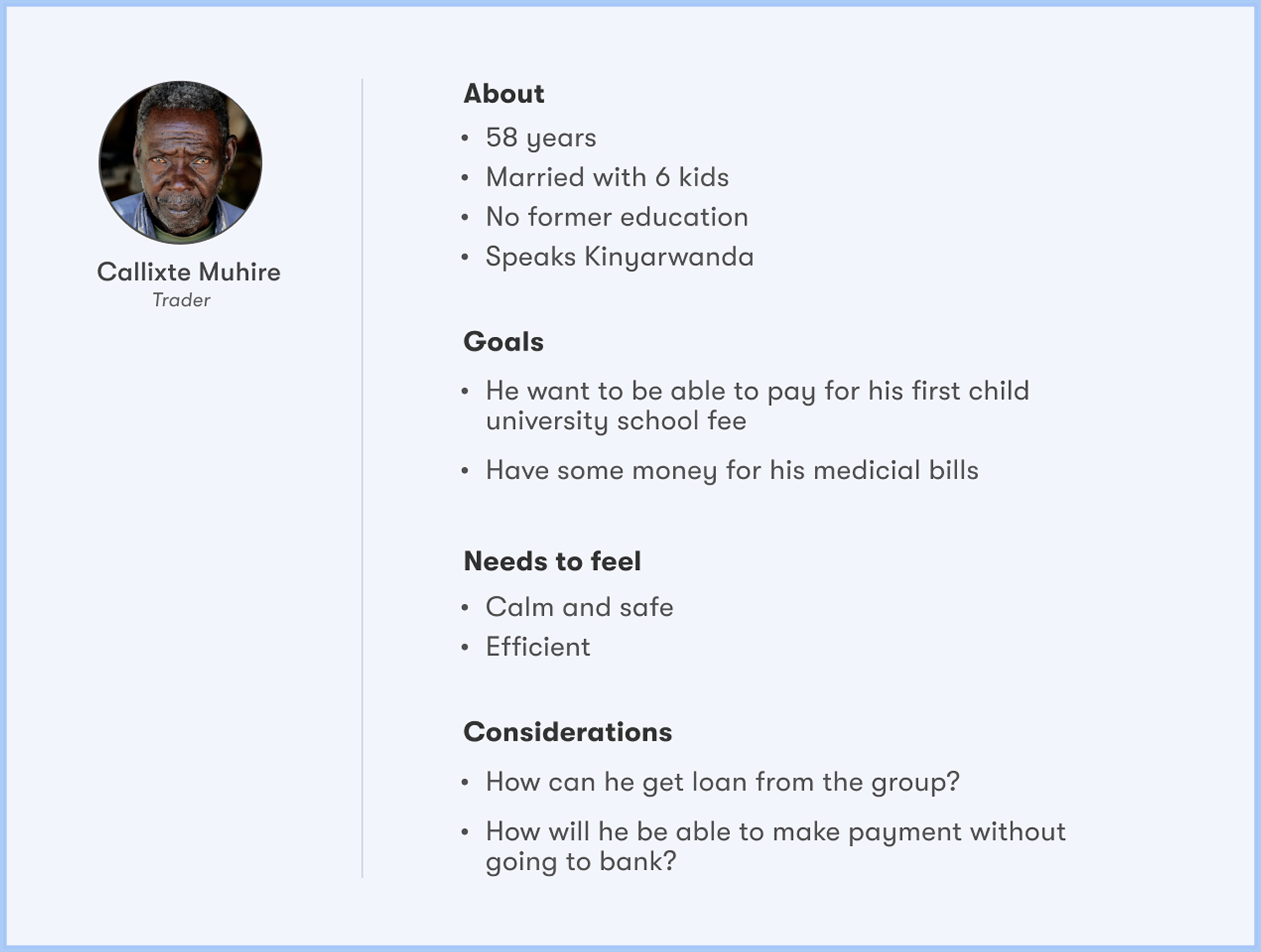
I developed two detailed user personas to keep the design process user-centered and aligned with real customer needs. These personas helped the team empathize with users, understand their goals and pain points, and design experiences that truly resonated with our target audience.
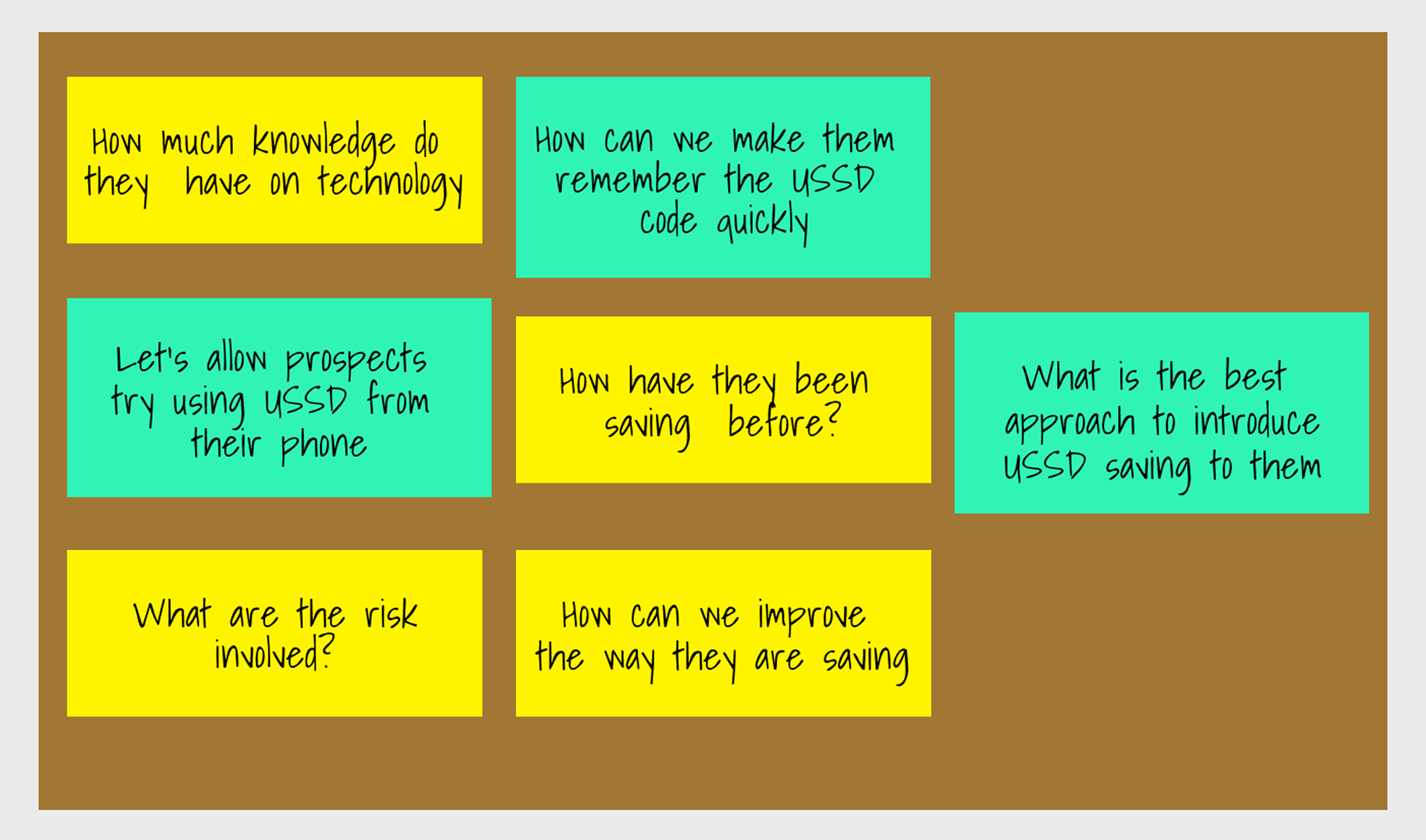
Designing Future User Experiences through Storyboarding
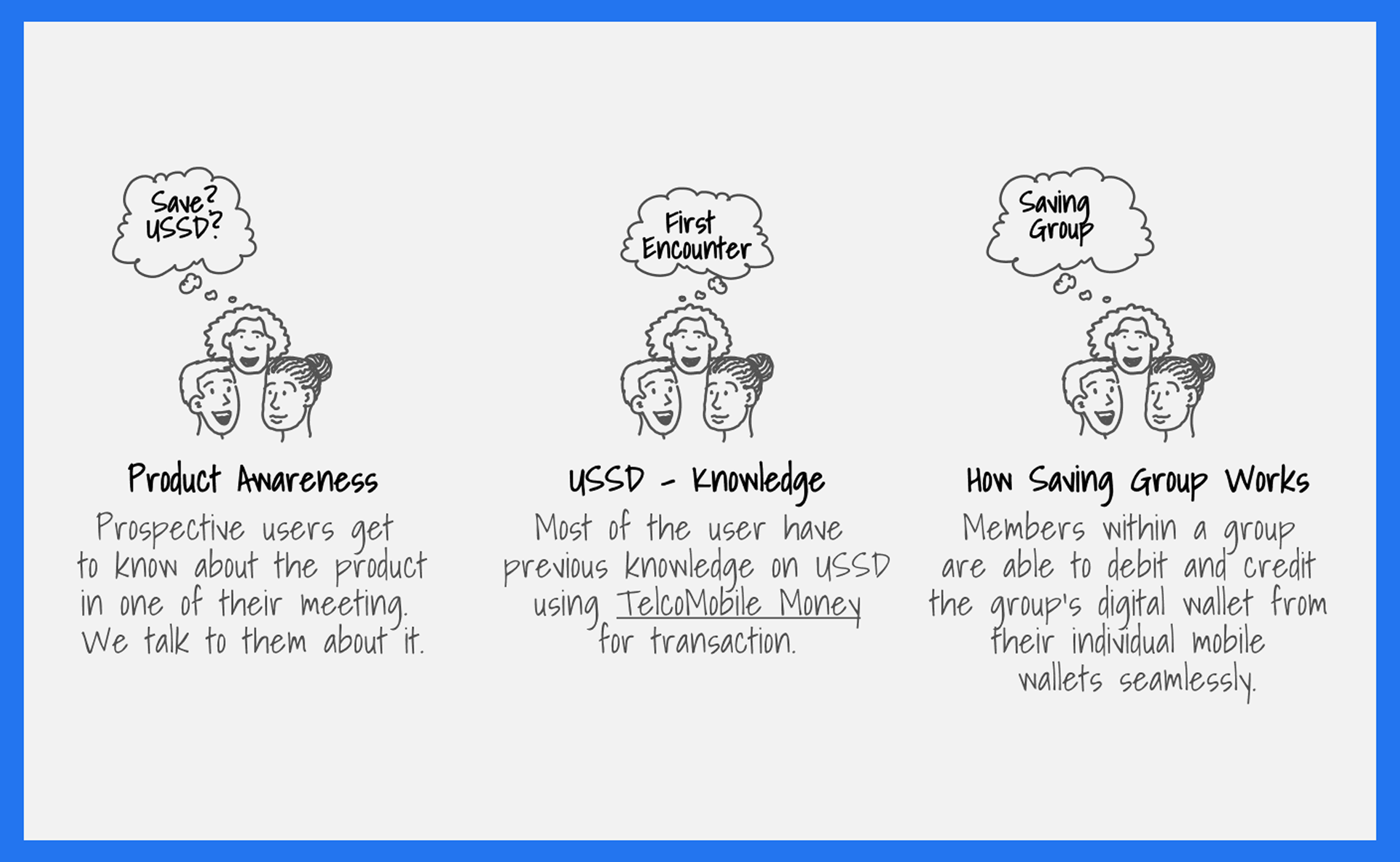
My primary goal was to digitise the traditional group saving system and enhance transparency among members. Through a detailed storyboarding exercise, stakeholders were able to visualise each stage of the saving journey, identify key interaction moments, and uncover user pain points. This process provided valuable UX insights into user behaviours, motivations, and expectations, helping shape a more intuitive and trustworthy digital saving experience.
Ideating and Envisioning Future User Experiences
The storyboarding session played a crucial role in defining the problem space and aligning all stakeholders around a shared product vision. It provided a structured framework to map the user journey, identify key touch points, and uncover pain points early in the design process.Through this exercise, I discovered opportunities to challenge existing industry assumptions and reimagine how users engage with group saving systems. This approach led to a more informed, data-driven, and user-centred design strategy, ensuring the final product delivered real value and meaningful user experiences.
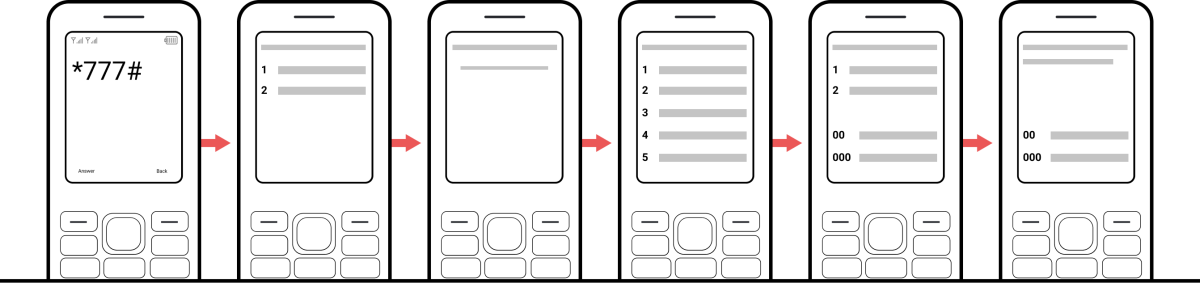
Envisioning Future User Experiences through User Flows
This simplified user flow diagram illustrates how users navigate and interact with the product across key stages of their journey, highlighting critical touchpoints and decision moments that shape the overall user experience and engagement.
 1.daf9d158.svg)
I created detailed, high-fidelity user flows to simulate a realistic product experience, enabling meaningful stakeholder feedback and supporting effective usability testing. This approach ensured that every interaction was user-centered, goal-driven, and optimized for seamless engagement.
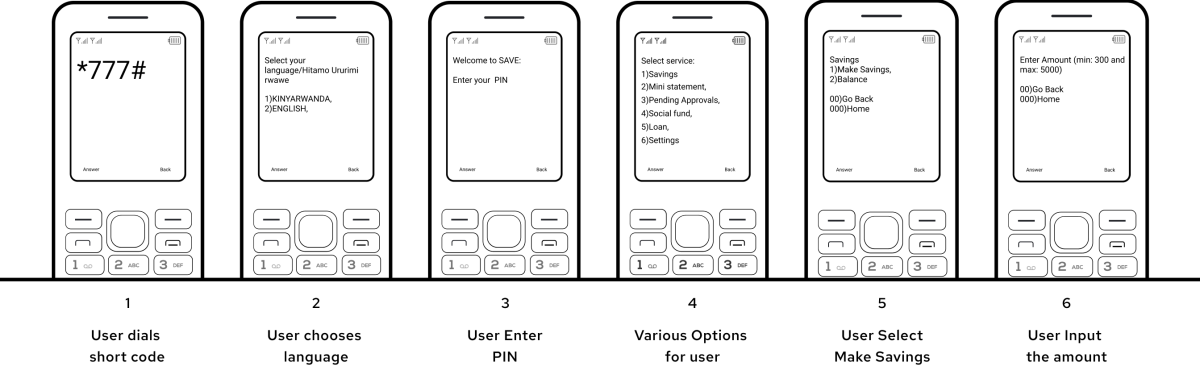
Validating Ideas: From Abstract Concepts to Visual Design
I designed comprehensive, detailed user flows to deliver a realistic and interactive user experience, fostering valuable stakeholder feedback and facilitating data-driven usability testing. This process ensured the product was intuitive, user-centered, and aligned with real user needs.
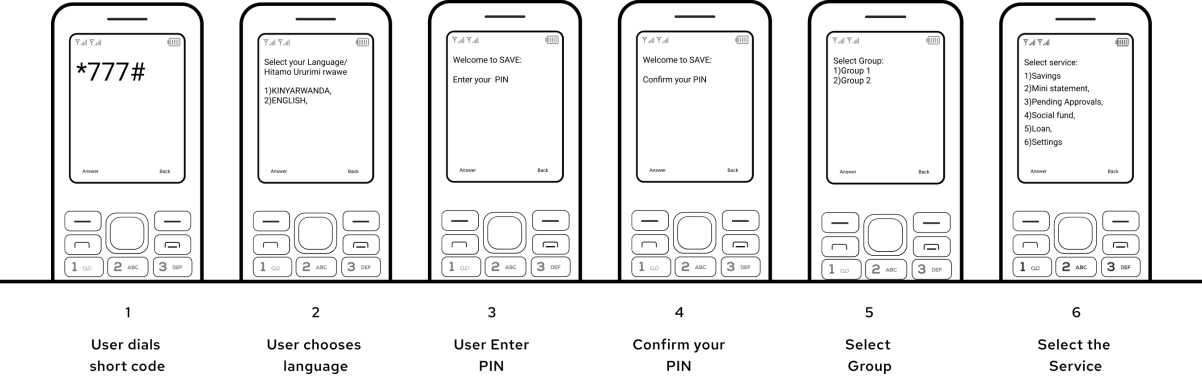
Detailed Interface Screens for Language Selection
During onboarding, users are prompted to select their preferred app language, ensuring a personalized and accessible experience from the very first interaction. This language choice can be updated anytime through the settings for greater flexibility and inclusivity.
The app offers two language options to cater to user needs:
- Kinyarwanda – Set as the default language, since over 90% of our target users speak and read it. It reflects the local culture and ensures accessibility for the majority.
- English – Provided as a secondary option, as it is the official language of Rwanda and commonly used in education, business, and formal communication.
This multilingual approach enhances user experience, inclusivity, and engagement, making the app intuitive and culturally relevant.

Validating Our Ideas through Usability Testing
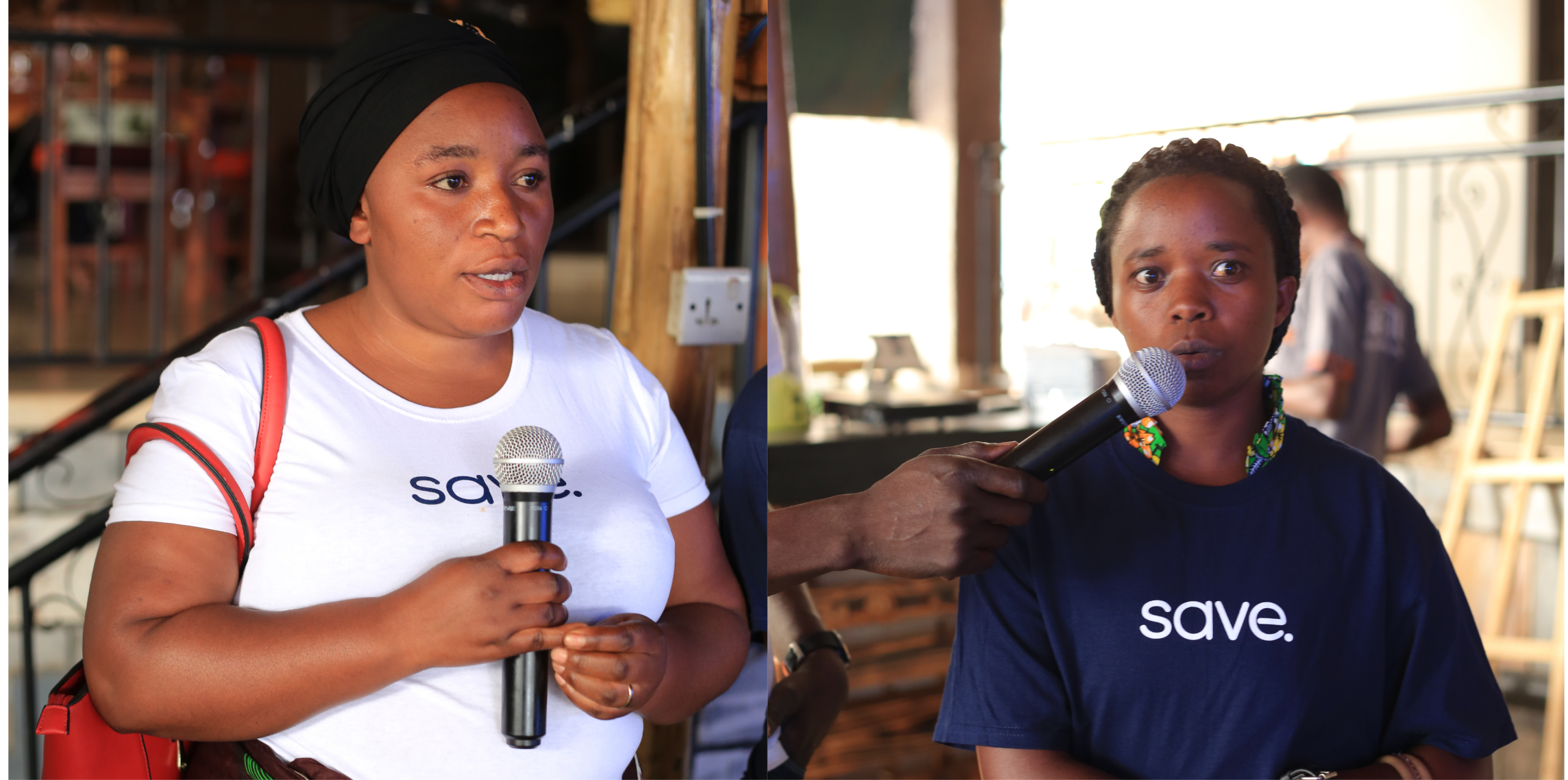
I conducted usability testing sessions with three participants to evaluate task success rates, capture authentic user reactions, and gather actionable feedback on the overall user experience and product usability. These insights helped refine the design for better efficiency, accessibility, and user satisfaction.
Usability Testing
25 Participants


Average Metrics
Recorded
Success Rate: 74%
Time to complete: 3.40 minutes
Duration
30 minutes
per session
Based on the usability testing results, I moved forward with confidence to release a beta version of the product to a small group of users in Rwanda's Eastern Province. Anticipating potential usability challenges, I collaborated closely with the team to establish feedback channels and monitoring systems that captured real user insights. This proactive approach ensured continuous improvement, strengthened user engagement, and supported a data-driven, user-centered product launch.
Beta Launch
Testing the Product in the Real World

Key Challenges Identified:
- Some users did not receive a verification PIN during the account creation process, which affected onboarding and account activation.
- Users who were members of multiple savings groups requested the ability to contribute to each group individually within the app, highlighting a need for multi-group functionality and improved user flexibility.
Solutions and Feature Enhancements
- Simplified onboarding experience: Removed the OTP (One-Time Password) requirement for PIN setup, allowing users to create their own secure PIN during onboarding for a smoother and faster registration process.
- Enhanced multi-group functionality: Enabled users to join and manage multiple savings groups, allowing them to contribute and perform transactions independently within each group, improving flexibility and overall user experience.
Learning & Achievement
So far, the project has been a remarkable success story. In less than two years, SAVE has processed over 300,000,000 RWF (approximately $300,000 USD) in transactions, demonstrating strong adoption and user trust.Through a strategic partnership with Access Bank PLC, SAVE has evolved into a widely recognised and trusted digital financial platform in Rwanda, empowering communities with secure, transparent, and accessible group saving solutions.
Get more details on SAVE here - https://getsave.io/
A short video on the project - https://bit.ly/3v9uLGX